
If you’ve been considering a straighter smile, you’ve likely compared Invisalign vs braces for adults while thinking about your schedule, work, and daily life. Adults often want excellent results without disrupting social settings, meals, or oral hygiene routines. Fortunately, modern orthodontic treatment offers multiple ways to move teeth comfortably and predictably.
At Hassey Do Duy TK Dental in Methuen, MA, we help adult patients from Methuen, Lawrence, Lowell, and Southern New Hampshire understand their options with clear, supportive guidance. We’ll explain everything in a way that’s easy to understand, so you can make an informed decision that supports your oral health and confidence.
Invisalign vs braces for adults: what are you actually comparing?
When patients ask about Invisalign vs braces for adults, they’re usually comparing removable aligners (clear aligners) with traditional braces that use metal brackets and wires. Both guide tooth movement toward a desired position over time, using gentle, consistent pressure as part of a personalized treatment plan.
The differences appear in everyday details—how your appliances look in social settings, how you brush and floss, what happens during regular visits, and whether you have food restrictions. Your final decision often depends on case complexity, lifestyle, and the type of alignment or bite issues that need correction.
How Invisalign clear aligners work for adult orthodontic treatment
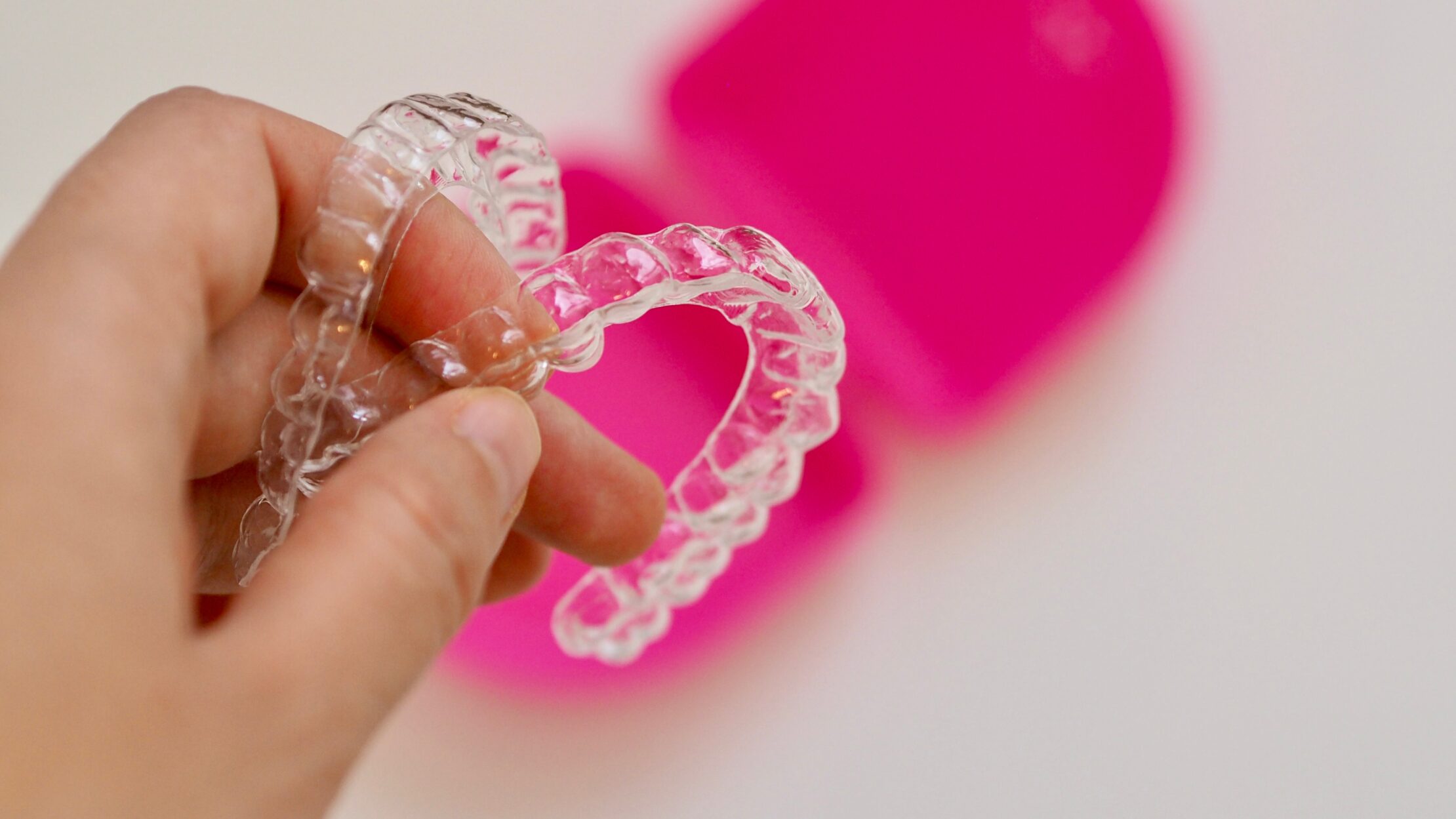
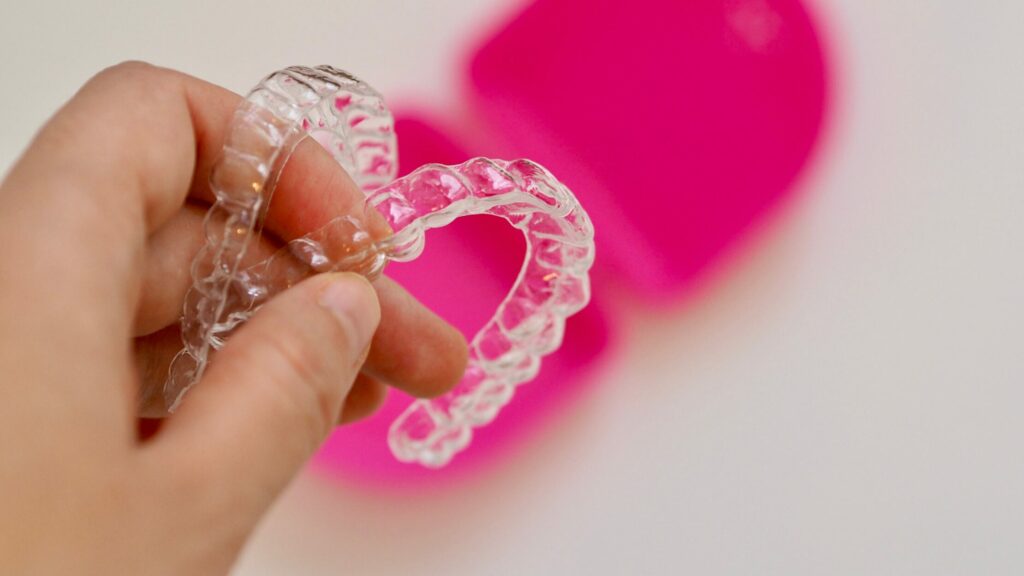
Invisalign aligners are clear plastic trays worn in a series. Each set of aligners is worn for a specific period, gradually guiding teeth into better alignment. Because they’re removable, many adults appreciate the flexibility they offer for meals, meetings, and special occasions. The smooth plastic design also feels comfortable in the mouth, without the sharp edges of metal brackets.
However, consistency is key. You’ll need to wear the aligners for the recommended hours daily to achieve the best results.
How traditional braces work (and why they are still a gold standard)
Traditional braces use metal brackets attached to the teeth and connected by wires to straighten teeth. They remain a gold standard for many orthodontic issues, especially when significant bite correction or precise control over tooth movement is needed.
Braces are often better for complex cases and severe crowding because they stay in place and work continuously. Some patients opt for ceramic braces, which use less noticeable ceramic brackets, offering a subtler appearance while functioning like traditional braces. Your dentist will help you determine which style fits your dental needs and bite problems.
Appearance and confidence in social settings
Many adults want straighter teeth without feeling self-conscious at work or during social events. Clear aligners are a popular choice because they’re hard to notice in most settings, including photos, presentations, and conversations. Patients often appreciate how Invisalign treatment blends into their routine.
Metal braces are more visible, but some adults don’t mind. Others prefer ceramic braces for a more subtle look. The right choice is the one that helps you feel comfortable and confident while your smile improves.
Comfort, irritation, and how each option feels day to day
Comfort is important, especially when balancing work, family, and busy schedules. Invisalign aligners typically feel like mild pressure when you switch to a new set, signaling that the trays are working. Many people also like that aligners don’t have protruding parts that can irritate cheeks or lips.
With traditional braces, you may feel pressure after adjustments, and the metal brackets can sometimes irritate soft tissue. Orthodontic wax and good guidance can help, and many adults adapt well to fixed appliances. Your experience will depend on your goals, tolerance for sensation, and the type of dental issues being treated.
Oral hygiene and dental care while straightening your teeth
Oral hygiene is a major factor in adult orthodontics because you want straighter teeth and healthier gums. When teeth are aligned, brushing and flossing can become easier, supporting oral health as you age.
With Invisalign, you remove the aligners to brush and floss, making daily cleaning more straightforward. With braces, maintaining great oral hygiene is possible but requires more time and technique to clean around brackets and wires. If you have a history of gum concerns, talk with your dentist about the approach that best supports your dental care routine.
Food restrictions, dietary restrictions, and life events
Adults often ask how orthodontic treatment will affect eating, travel, and celebrations. With Invisalign, you remove the trays to eat, so there are fewer dietary restrictions. This flexibility can be helpful during holidays, client dinners, and special occasions.
With braces, food restrictions are more important because certain foods can damage brackets or bend wires. Sticky candies, hard snacks, and crunchy foods can lead to unexpected dental problems. If your schedule includes frequent travel or social events, the convenience of Invisalign may influence your decision.
Treatment time, case complexity, and bite issues
Treatment time is a common concern, and the answer depends on your starting point, bite issues, and how much movement is needed. Mild spacing and minor crooked teeth may fall into the mild-to-moderate category, while severe crowding or significant bite correction requires more planning.
Both clear aligners and braces can achieve excellent results. Some alignment issues respond well to Invisalign, while complex cases and bite problems are better served by braces for predictable, hands-on control. The best results come from matching the tool to your case, not from choosing what worked for someone else.
Are Invisalign aligners or metal braces better for you?
This is one of the most common questions we hear at our Methuen office. The answer starts with a careful exam. Your dentist will evaluate your teeth, gums, and bite to understand orthodontic issues and any related dental work that may affect planning. This evaluation helps build a treatment plan that fits your goals and protects your oral health.
If you value a discreet look, flexibility for eating, and easier brushing and flossing, Invisalign may be a strong fit. If you need significant bite correction, have severe crowding, or your case complexity calls for fixed appliances, braces may be the best choice. Either way, you deserve clear explanations and a plan you feel confident about.
Cost, insurance coverage, and payment options for adult orthodontics
Cost is an important part of the conversation, and you should feel comfortable asking about it. Many adult patients want to understand payment options and financing early, including how dental insurance may contribute. Insurance coverage varies, so it helps to review your benefits and discuss what documentation is needed.
During your visit, our team can explain your options in plain language so you can plan ahead. If you’re weighing Invisalign vs braces for adults, budgeting can be part of your informed decision alongside comfort, appearance, and dental needs.
What to expect at your first step in Methuen
Your first step is a consultation where we listen to what you want to change and what matters most in your daily life. We’ll examine your teeth and bite, discuss your alignment issues, and review orthodontic treatment options that make sense for you. If Invisalign is appropriate, impressions may be taken to plan your series of trays.
You’ll also have time to ask questions about regular visits, how often to change aligners, and how to care for your smile during treatment. Communication is our top priority, and we want you to feel confident before you start.
Ready to talk about Invisalign vs braces for adults in Methuen?
If you live in Methuen, Lawrence, Lowell, or Southern New Hampshire and are comparing Invisalign vs braces for adults, we’re here to help. At Hassey Do Duy TK Dental, Dr. Tanya Khawam, Dr. Edward Hassey, and Dr. Thinh Do Duy provide orthodontics and Invisalign with a personalized, patient-first approach.
Schedule your consultation today. We’re always happy to welcome new patients of all ages and help you choose a path to a straighter smile that fits your life.